1面
大山時間 特別体験ツアー
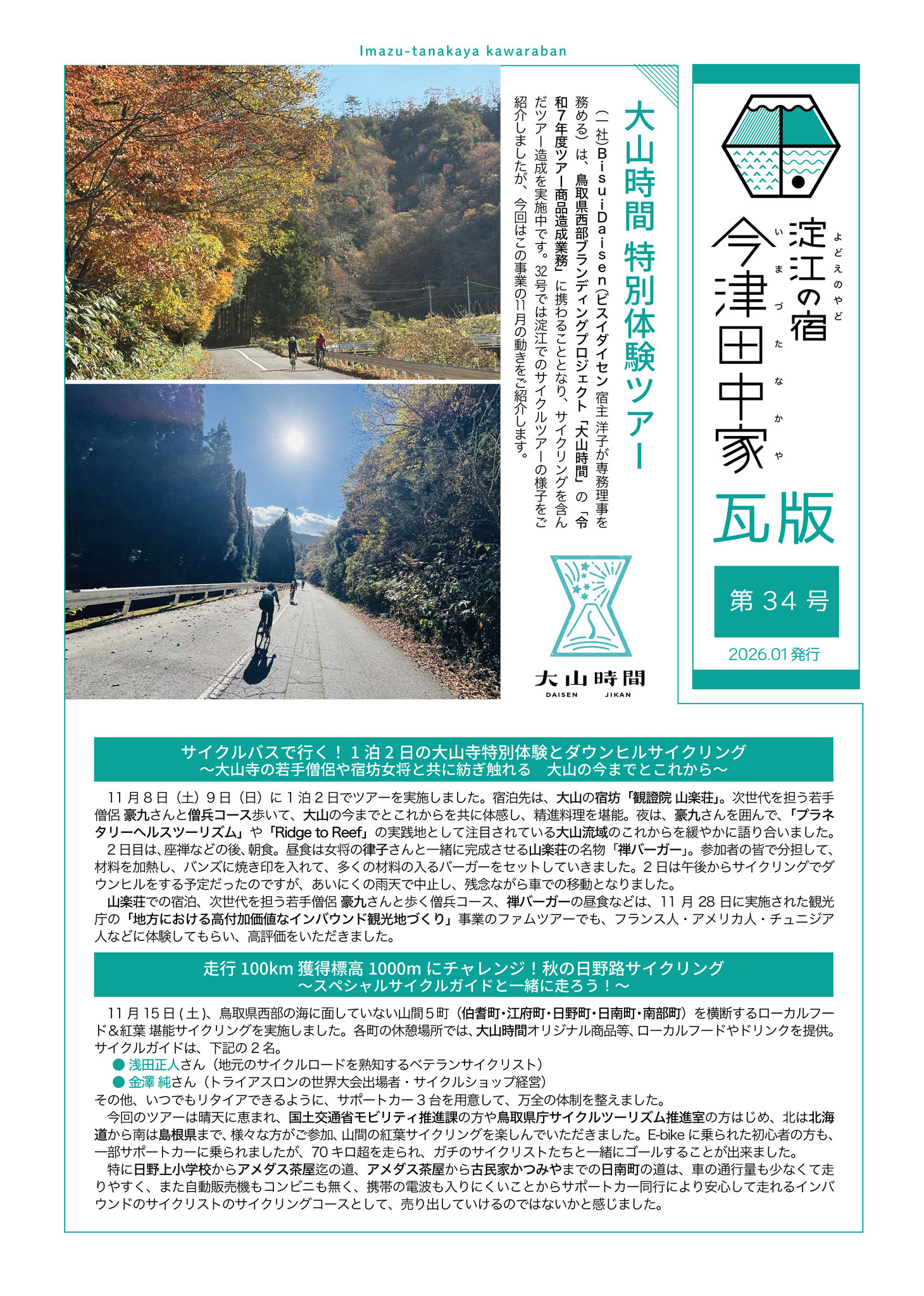
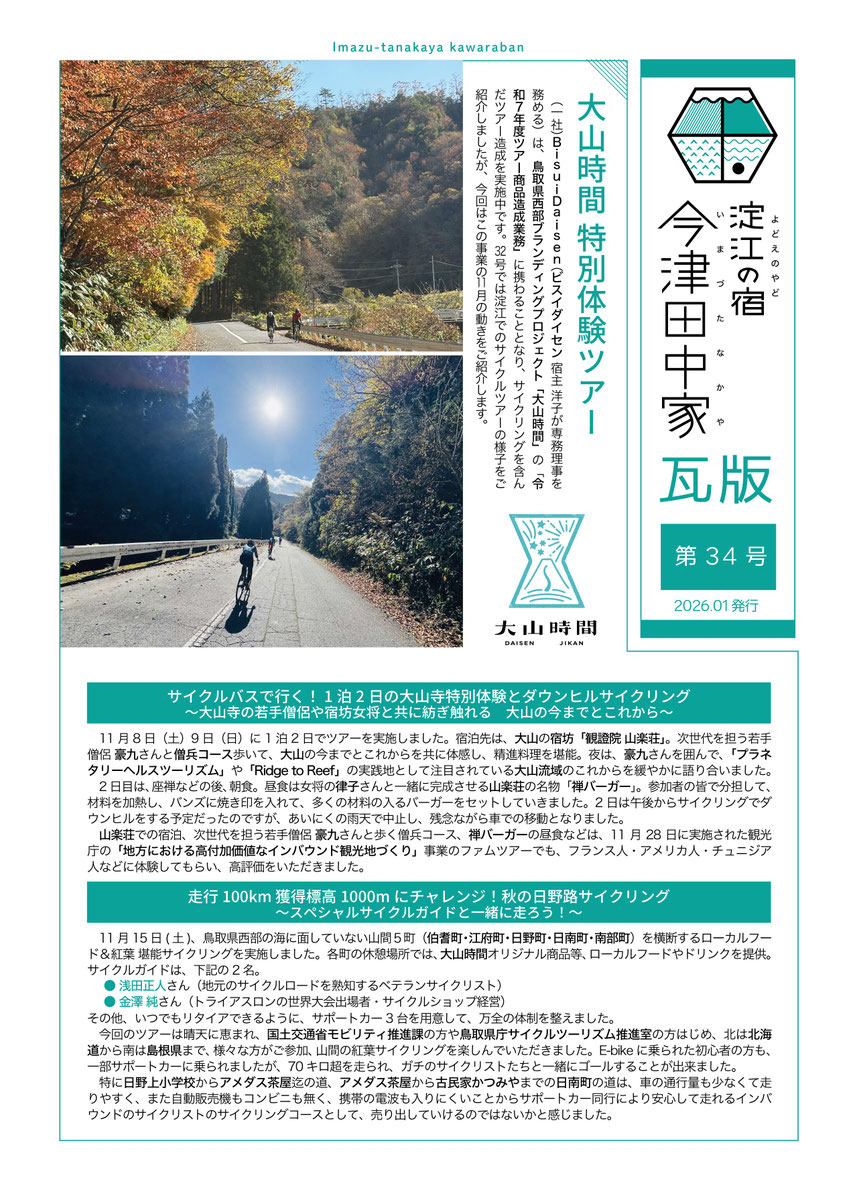
(一社)BisuiDaisen(ビスイダイセン 宿主 洋子が専務理事を務める)は、鳥取県西部ブランディングプロジェクト「大山時間」の「令和7年度ツアー商品造成業務」に携わることとなり、サイクリングを含んだツアー造成を実施中です。32号では淀江でのサイクルツアーの様子をご紹介しましたが、今回はこの事業11月の動きをご紹介します。
サイクルバスで行く! 1泊2日の大山寺特別体験とダウンヒルサイクリング
~大山寺の若手僧侶や宿坊女将と共に紡ぎ触れる 大山の今までとこれから~
11月8日(土)9日(日)に1泊2日でツアーを実施しました。宿泊先は、大山の宿坊「観證院 山楽荘」。次世代を担う若手僧侶 豪九さんと僧兵コース歩いて、大山の今までとこれからを共に体感し、精進料理を堪能。夜は、豪九さんを囲んで、「プラネタリーヘルスツーリズム」や「Ridge to Reef」の実践地として注目されている大山流域のこれからを緩やかに語り合いました。2日目は、座禅などの後、朝食。昼食は女将の律子さんと一緒に完成させる山楽荘の名物「禅バーガー」。参加者の皆で分担して、材料を加熱し、バンズに焼き印を入れて、多くの材料の入るバーガーをセットしていきました。
2日は午後からサイクリングでダウンヒルをする予定だったのですが、あいにくの雨天で中止し、残念ながら車での移動となりました。
山楽荘での宿泊、次世代を担う若手僧侶 豪九さんと歩く僧兵コース、禅バーガーの昼食などは、11月28日に実施された観光庁の「地方における高付加価値なインバウンド観光地づくり」事業のファムツアーでも、フランス人・アメリカ人・チュニジア人などに体験してもらい、高評価をいただきました。
走行100km 獲得標高1000mにチャレンジ!秋の日野路サイクリング
~スペシャルサイクルガイドと一緒に走ろう!~
11月15日(土)、鳥取県西部の海に面していない山間5町(伯耆町・江府町・日野町・日南町・南部町)を横断するローカルフード&紅葉 堪能サイクリングを実施しました。各町の休憩場所では、大山時間オリジナル商品等、ローカルフードやドリンクを提供。サイクルガイドは、下記の2名。
浅田正人さん(地元のサイクルロードを熟知するベテランサイクリスト)
金澤 純さん(トライアスロンの世界大会出場者・サイクルショップ経営
その他、いつでもリタイアできるように、サポートカー3台を用意して、万全の体制を整えました。
今回のツアーは晴天に恵まれ、国土交通省モビリティ推進課の方や鳥取県庁サイクルツーリズム推進室の方はじめ、北は北海道から南は地元まで、様々な方がご参加、山間の紅葉サイクリングを楽しんでいただきました。E-bikeに乗られた初心者の方も、一部サポートカーに乗られましたが、70キロ超を走られ、ガチのサイクリストたちと一緒にゴールすることが出来ました。
特に日野上小学校からアメダス茶屋迄の道、アメダス茶屋から古民家かつみやまでの日南町の道は、車の通行量も少なくて走りやすく、また自動販売機もコンビニも無く、携帯の電波も入りにくいことからサポートカー同行により安心して走れるインバウンドのサイクリストのサイクリングコースとして、売り出していけるのではないかと感じました。
2面
洋子のエチオピア滞在記 Vol.5(最終回)
結婚式には着物で参列
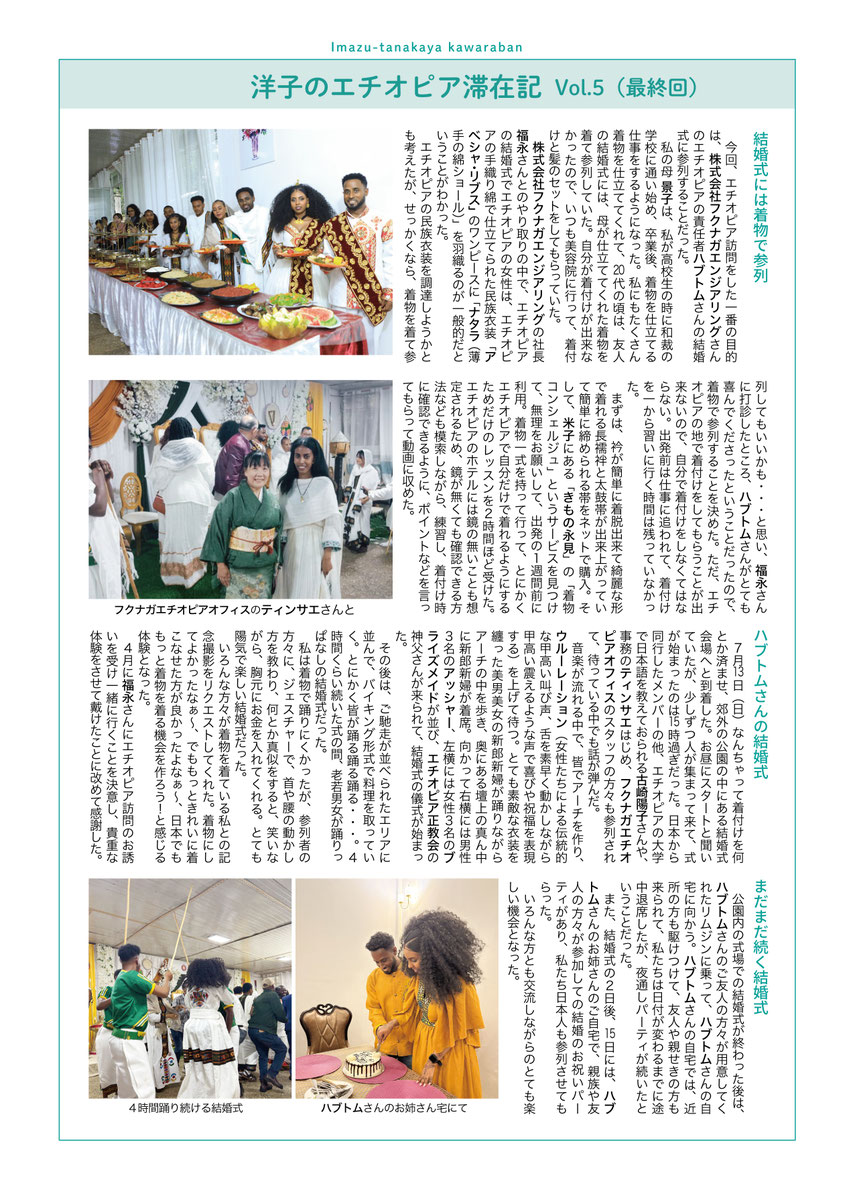
今回、エチオピア訪問をした一番の目的は、株式会社フクナガエンジアリングさんのエチオピアの責任者ハブトムさんの結婚式に参列することだった。
私の母 景子は、私が高校生の時に和裁の学校に通い始め、卒業後、着物を仕立てる仕事をするようになった。私にもたくさん着物を仕立ててくれて、20代の頃は、友人の結婚式には、母が仕立ててくれた着物を着て参列していた。自分が着付けが出来なかったので、いつも美容院に行って、着付けと髪のセットをしてもらっていた。
株式会社フクナガエンジアリングの社長 福永さんとのやり取りの中で、エチオピアの結婚式でエチオピアの女性は、エチオピアの手織り綿で仕立てられた民族衣装「アベシャ・リブス」のワンピースに「ナタラ(薄手の綿ショール)」を羽織るのが一般的だということがわかった。
エチオピアの民族衣装を調達しようかとも考えたが、せっかくなら、着物を着て参列してもいいかも・・・と思い、福永さんに打診したところ、ハブトムさんがとても喜んでくださったということだったので、着物で参列することを決めた。ただ、エチオピアの地で着付けをしてもらうことが出来ないので、自分で着付けをしなくてはならない。出発前は仕事に追われて、着付けを一から習いに行く時間は残っていなかった。
まずは、衿が簡単に着脱出来て綺麗な形で着れる長襦袢と太鼓帯が出来上がっていて簡単に締められる帯をネットで購入。そして、米子にある「きもの永見」の「着物コンシェルジュ」というサービスを見つけて、無理をお願いして、出発の1週間前に利用。着物一式を持って行って、とにかくエチオピアで自分だけで着れるようにするためだけのレッスンを2時間ほど受けた。エチオピアのホテルには鏡の無いことも想定されるため、鏡が無くても確認できる方法なども模索しながら、練習し、着付け時に確認できるように、ポイントなどを言ってもらって動画に収めた。
Yoko's Ethiopia Travel Diary Vol.5(Final Episode)
Attending a wedding in a kimono
My main purpose for visiting Ethiopia this time was to attend the wedding of Haftom, the Ethiopian manager of Fukunaga Engineering Co., Ltd.
My mother, Keiko, started attending Japanese dressmaking school when I was in high school and went to work tailoring kimonos after graduating. She made many kimonos for me, and when I was in my twenties, I would attend friends' weddings wearing kimonos made by my mother. I couldn't dress myself, so I always went to a beauty salon to have my kimono put on and my hair styled.
Through my conversations with Fukunaga, the president of Fukunaga Engineering Co., Ltd., I learned that at Ethiopian weddings, Ethiopian women typically wear an Abesha Libs dress, a traditional Ethiopian dress made from hand-woven cotton, accompanied by a natala (a thin cotton shawl).
I considered purchasing Ethiopian traditional attire, but thought it might be a good idea to wear a kimono, so I asked Fukunaga about it. He told me that Haftom was very happy with the idea, so I decided to wear a kimono. However, I couldn't get someone to help me dress in Ethiopia, so I had to dress myself. I was busy with work before my departure and didn't have time to go and learn how to dress myself from scratch.
First, I purchased a nagajuban (long under-kimono) with an easy-to-wear collar and a beautiful, easy-to-wear obi (sash) online. I then found a "Kimono Concierge" service from Kimono Nagami in Yonago and asked them to help me out a week before my departure. I took the entire kimono with me and took a two-hour lesson just to make sure I could dress myself in Ethiopia. Since hotels in Ethiopia might not have mirrors, I practiced, exploring ways to check my kimono even without one, and recorded a video with their instructions on key points so I could check them when dressing.
ハブトムさんの結婚式
7月13日(日) なんちゃって着付けを何とか済ませ、郊外の公園の中にある結婚式会場へと到着した。お昼にスタートと聞いていたが、少しずつ人が集まって来て、式が始まったのは15時過ぎだった。日本から同行したメンバーの他、エチオピアの大学で日本語を教えておられる古崎陽子さんや、事務のティンサエはじめ、エチオピア法人のスタッフの方々も参列されて、待っている中でも話が弾んだ。
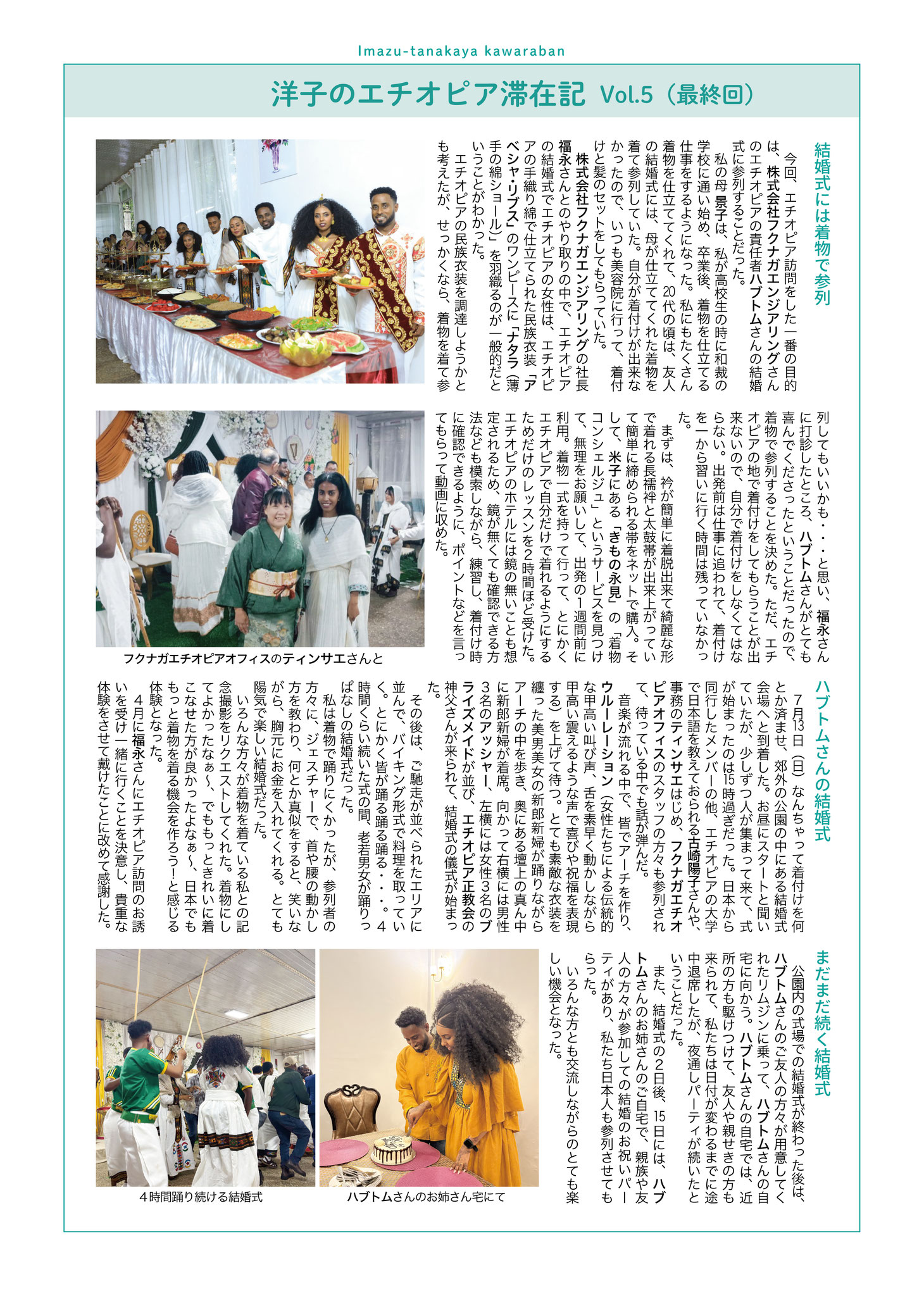
音楽が流れる中で、皆でアーチを作り、ウルーレーション(女性たちによる伝統的な甲高い叫び声、舌を素早く動かしながら甲高い震えるような声で喜びや祝福を表現する)を上げて待つ。とても素敵な衣装を纏った美男美女の新郎新婦が踊りながらアーチの中を歩き、奥にある壇上の真ん中に新郎新婦が着席。向かって右横には男性3名のアッシャー、左横には女性3名のブライズメイドが並び、エチオピア正教会の神父さんが来られて、結婚式の儀式が始まった。
その後は、ご馳走が並べられたエリアに並んで、バイキング形式で料理を取っていく。とにかく皆が踊る踊る踊る・・・。4時間くらい続いた式の間、老若男女が踊りっぱなしの結婚式だった。
私は着物で踊りにくかったが、参列者の方々に、ジェスチャーで、首や腰の動かし方を教わり、何とか真似をすると、笑いながら、胸元にお金を入れてくれる。とても陽気で楽しい結婚式だった。
いろんな方々が着物を着ている私との記念撮影をリクエストしてくれた。着物にしてよかったなぁ~、でももっときれいに着こなせた方が良かったよなぁ~、日本でももっと着物を着る機会を作ろう!と感じる体験となった。
4月に福永さんにエチオピア訪問のお誘いを受けて、一緒に行くことを決意し、貴重な体験をさせて戴けたことに改めて感謝した。
Haftom's Wedding
Sunday, July 13th. After somehow managing to get dressed in our makeshift kimonos, we arrived at the wedding venue in a suburban park. We'd been told the ceremony would begin at noon, but gradually people began to arrive, and the ceremony didn't begin until after 3:00 PM. In addition to the members who accompanied us from Japan, Yoko Furusaki, who teaches Japanese at a university in Ethiopia, Tinsae, the office staff, and other members of the Ethiopian subsidiary were also in attendance. We enjoyed lively conversation while waiting.
As music played, we all formed an arch and waited, raising our ururations (a traditional high-pitched shout made by women, a high-pitched, trembling voice accompanied by rapid tongue movements, expressing joy or celebration). The beautiful bride and groom, dressed in exquisite attire, danced through the arch and then sat in the center of the stage at the back. Three male ushers lined up to our right, and three female bridesmaids to our left. An Ethiopian Orthodox priest arrived, and the wedding ceremony began.
After that, we lined up in the area where the delicacies were laid out and took our food buffet-style. Everyone just danced and danced... It was a wedding ceremony that lasted about four hours, with people of all ages and genders dancing nonstop.
It was difficult for me to dance in my kimono, but the guests used gestures to teach me how to move my neck and waist, and when I managed to imitate them, they laughed and put money into my chest. It was a very cheerful and fun wedding.
Many people requested to take commemorative photos with me in my kimono. I'm glad I wore a kimono, but I wish I could have worn it more beautifully. It was an experience that made me realize I should create more opportunities to wear kimono in Japan!
When Fukunaga invited me to visit Ethiopia in April, I decided to go with him, and I was once again grateful for the valuable experience.
まだまだ続く結婚式
公園内の式場での結婚式が終わった後は、ハブトムさんのご友人の方々が用意してくれたリムジンに乗って、ハブトムさんの自宅に向かう。ハブトムさんの自宅では、近所の方も駆けつけて、友人や親せきの方も来られて、私たちは日付が変わるまでに途中退席したが、夜通しパーティが続いたということだった。
また、結婚式の2日後、15日には、ハブトムさんのお姉さんのご自宅で、親族や友人の方々が参加しての結婚のお祝いパーティがあり、私たち日本人も参列させてもらった。
いろんな方とも交流しながらのとても楽しい機会となった。
The wedding continues
After the wedding ceremony at the ceremony hall in the park, we headed to Haftom's home in a limousine provided by his friends. Neighbors, friends, and relatives also came to the party, and although we left before midnight, the party continued all night.
Two days after the wedding, on the 15th, there was a wedding celebration party at Haftom's sister's home, attended by family and friends, and we Japanese were also able to attend.
It was a really enjoyable opportunity to interact with so many different people.
3面
4面